The One Number That Doesn't Lie to You
Income can look healthy in a year that's actually going backward. Ties to Move 4 — Protect the Lifeboat, which tracks Net Worth apart from everyday spending.
Income can look healthy in a year that's actually going backward. A raise gets absorbed by lifestyle creep, a good month gets undone by a bad one, and month-to-month spending can feel fine even while debt quietly grows. There's one number that doesn't have this problem, because it isn't a snapshot of a single month — it's a running total of everything: net worth, what's owned minus what's owed.
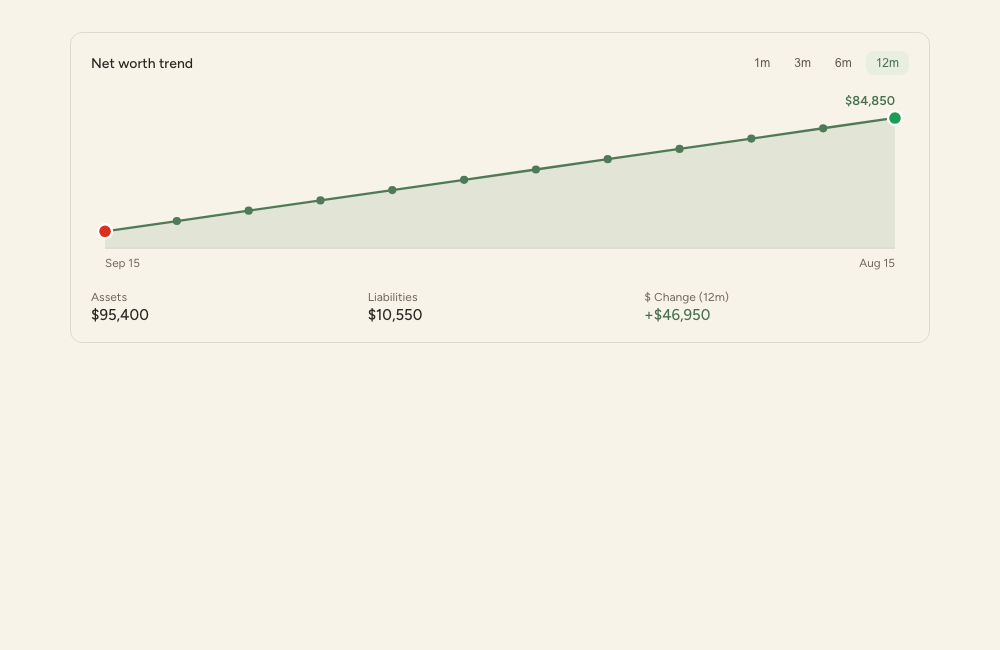
Statistics Canada's 2023 Survey of Financial Security puts median Canadian household net worth at $519,700 — households under 35 sit at $159,100 (up 179% from 2019, the largest jump of any age group), while households aged 55–64 with both a principal residence and an employer pension plan have a median net worth about $1.4 million higher than those with neither. The number itself matters less than the direction it's moving. Comparing this year's net worth to last year's isn't about hitting a specific target — it's about the trend line, because the trend line is the real report card.
Why one number beats a dozen good habits
It's possible to do everything that looks right — pay bills on time, avoid obvious debt, keep a steady job — and still not know whether any of it is actually working. Net worth is the number that settles the question, because it nets everything out automatically. Paid down a chunk of the mortgage this year? It shows. Ran up a credit card over the holidays? It shows that too, immediately, without needing a separate conversation about it.
That's also what makes it more useful than watching income alone. Two people earning the same salary can be moving in completely opposite directions — one building equity and paying down debt, the other sliding further behind — and income alone would show them as identical. Net worth wouldn't.
What actually goes into it
Net worth is simple in concept: everything owned, minus everything owed.
- Assets: cash, investments, retirement accounts (RRSP, TFSA), home equity, any other property with real value.
- Liabilities: mortgage balance, loans, credit card debt, any other money owed.
One nuance worth knowing: registered accounts like an RRSP hold pre-tax dollars, meaning a $100,000 balance is worth less once withdrawal tax is paid: closer to $70,000 at a 30% tax rate. It's fine to track the full balance for simplicity, as long as it's tracked consistently the same way every time — the trend matters more than perfect precision on any single snapshot.
How often, and what to actually do with it
Once a year is enough to see the trend clearly; monthly or quarterly makes the connection between decisions and outcomes more immediate. What matters isn't the frequency — it's that it's checked at all, and checked the same way each time, so this year is genuinely comparable to last year.
This is why net worth sits inside the Command Center rather than as a separate, occasional exercise. A budget answers "am I staying within my means this month." Net worth answers the bigger question underneath it: "is any of this actually building toward something." Both matter. Only one of them can't be faked by a good month.
— The Sovereign Team